María Corina Machado was awarded the 2025 Nobel Peace Prize for her tireless efforts to promote democratic rights in Venezuela and her struggle to achieve a just and peaceful transition from dictatorship to democracy.
Her courageous leadership in the face of authoritarianism in Venezuela has made her an emblem of civilian bravery and a unifying figure for a fragmented opposition, inspiring millions amid a severe humanitarian and political crisis.
In contrast, former U.S. President Donald Trump, who publicly lobbied for the prize citing his role in negotiating peace deals, was denied the award mainly because many of his nominations arrived after the Nobel Committee’s strict deadline, and his claimed achievements faced political skepticism.
Why María Corina Machado Won the Prize
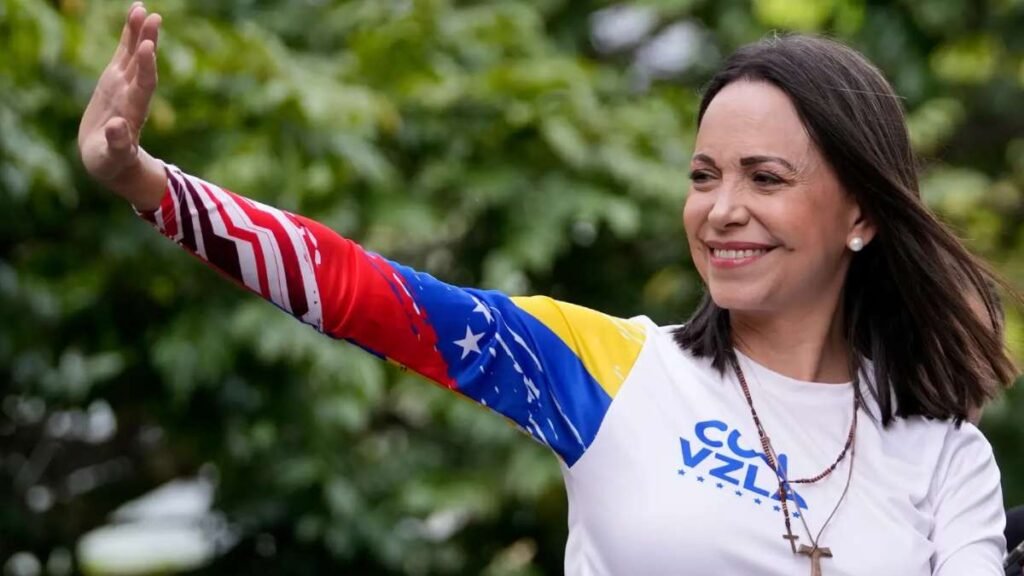
The Norwegian Nobel Committee awarded María Corina Machado the Nobel Peace Prize for her relentless commitment to defending democratic values in Venezuela.
Under an increasingly authoritarian regime that has plunged the country into economic and humanitarian disaster, Machado has pushed for free elections and representative government, becoming a prominent opposition leader despite serious threats to her safety.
Her work has been recognized as crucial in keeping democratic aspirations alive in a country where political repression and poverty have become rampant.
The committee highlighted her role in uniting a previously divided opposition and her unwavering stance despite living in hiding for much of the past year.
Benefits of Receiving the Nobel Peace Prize
Receiving the Nobel Peace Prize bestows several important benefits:
- Global Recognition and Legitimacy: The prize brings international recognition to the recipient’s cause, amplifying their voice on the world stage. For María Corina Machado, it elevates the Venezuelan democracy movement’s visibility and global support.
- Moral and Political Influence: Nobel laureates often gain increased moral authority and influence, which can be pivotal in catalyzing political change or peace processes.
- Access to Resources and Networks: Prize winners gain access to influential networks, funding possibilities, and platforms to share their message widely, which can strengthen their capacity to effect change.
- Protection and Security: While not guaranteed, laureates sometimes benefit from increased global attention that may provide a degree of protection against governmental repression or threats.
- Inspiration to Followers: The Nobel stamp inspires supporters and international civil society to rally behind the laureate’s cause, causing renewed energy in movements for peace and human rights.
Also See: IRS Direct Deposit Relief Payment: What It Means for Millions of Americans in 2025
Why Donald Trump Was Desperate to Receive It
Donald Trump openly sought the Nobel Peace Prize in 2025, claiming significant achievements including brokering peace deals and ending conflicts, such as between Israel and Hamas or India and Pakistan.
Since his reelection and return to office in January 2025, Trump has repeatedly lobbied for the prize, emphasizing his diplomatic initiatives in the Middle East and South Asia.
His ambitions were bolstered by political backing from some quarters and multiple nominations.
However, many of his nominations were submitted after the Nobel Committee’s February 1 cutoff deadline, immediately disqualifying them for 2025 consideration.
Moreover, despite his claims, several international observers and governments have questioned the scope and impact of his peace efforts.
The Nobel Committee maintains strict independence and bases its decisions solely on Alfred Nobel’s will, which emphasizes enduring contributions to peace, democracy, and human rights over short-term political maneuvers.
The chair of the Nobel Committee stated the decision was consistent with these principles, leading to Trump’s bid being unsuccessful and the prize going instead to a figure whose activism aligns closely with the Nobel ideals.
Context of the 2025 Nobel Peace Prize Decision
The 2025 Nobel Peace Prize was awarded at a time when democracy worldwide faces growing challenges.
The Committee’s choice to honor María Corina Machado underlines the ongoing importance of civilian courage and persistent efforts to uphold democratic institutions in hostile environments.
Venezuela’s evolution from a relatively prosperous democracy into a crisis-ridden authoritarian state highlights the urgent need for peaceful advocacy for democratic rights.
The Nobel Prize serves as both recognition and a call to action, emphasizing peace not just as the absence of war but as the presence of democratic freedoms and human dignity.
Machado’s award also reflects the Nobel Committee’s intention to spotlight defenders of democracy globally amid political turmoil and repression.
In summary, María Corina Machado received the 2025 Nobel Peace Prize for her courageous and sustained fight for democracy in Venezuela, a recognition that carries global influence, moral authority, and practical benefits for her cause.
Meanwhile, Donald Trump’s failure to secure the prize was due mainly to procedural reasons about nomination deadlines and the Nobel Committee’s strict criteria for peace contributions.
Machado’s award underscores the prize’s role in honoring those who champion human rights and democratic governance in the most challenging circumstances.
