Dividend-paying companies remain a core component of many long-term investment portfolios. They not only provide a steady income stream but often represent mature businesses with stable cash flows and resilient business models.
In today’s uncertain economic environment, marked by inflation concerns, geopolitical tensions, and cautious consumer spending – investors are increasingly gravitating toward reliable dividend leaders.
Below are three well-established companies that stand out for their dividend strength, market position, and strategic developments.
1. Exxon Mobil: Strengthening Its Foundation for Long-Term Growth
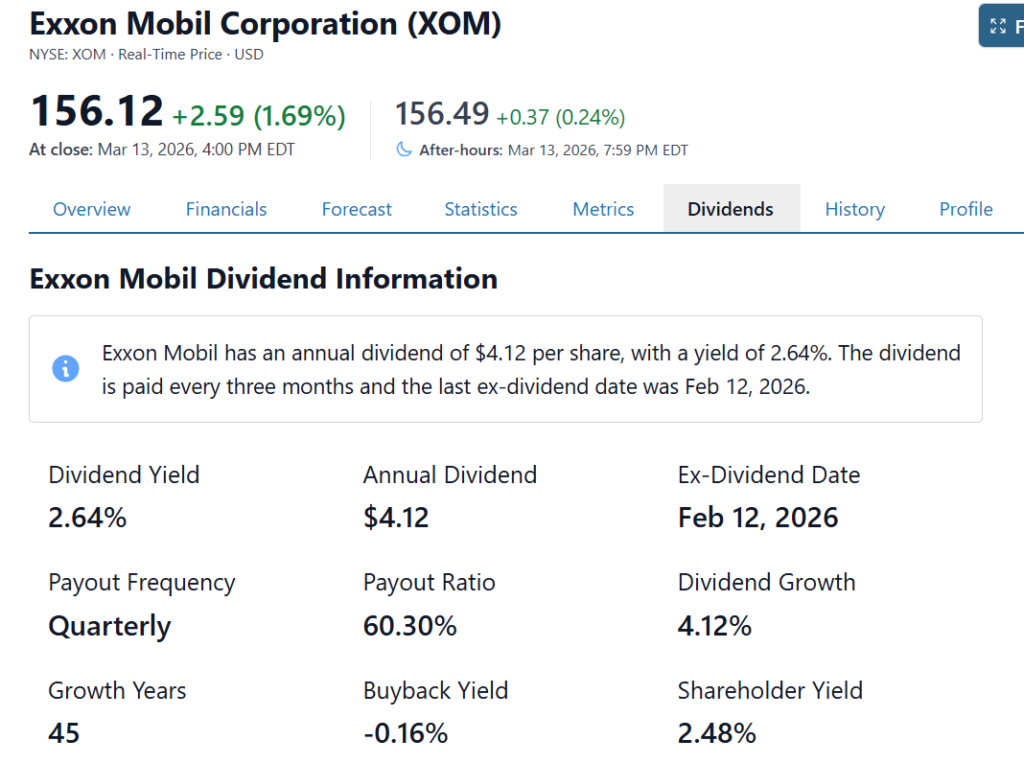
Exxon Mobil Corporation is one of the world’s largest integrated energy companies, operating across fuels, lubricants, and chemicals.
With a market value exceeding $630 billion, the company has maintained a strong presence in the global energy industry for decades.
Recently, Exxon made headlines with plans to shift its legal domicile from New Jersey to Texas. The move reflects a broader corporate trend of relocating to regions perceived as more business-friendly.
Texas has long served as Exxon’s operational base since the company moved its headquarters there from New York in 1989.
CEO Darren Woods explained that the proposed redomiciling aims to reduce exposure to what companies consider unnecessary shareholder litigation.
Texas, with its deep ties to the oil and gas sector, offers regulatory familiarity and an environment more aligned with the industry’s long-term interests.
If shareholders approve the proposal, Exxon will join companies like Tesla, Inc. and Coinbase Global, Inc. that have also chosen Texas for incorporation.
Beyond the corporate restructuring, Exxon remains a powerful dividend player thanks to its strong cash flow from energy production and refining.
For income-focused investors seeking exposure to the energy sector, Exxon’s scale, profitability, and shareholder returns make it a compelling option.
2. Verizon: A Telecom Giant Focused on Efficiency and Growth
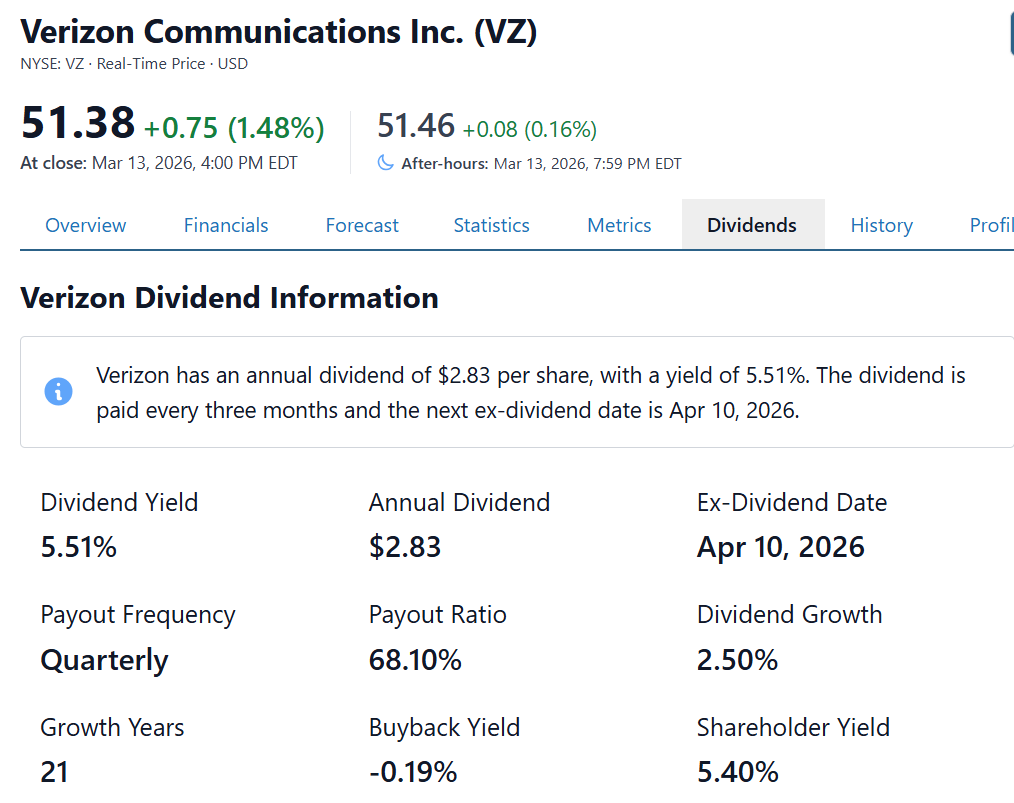
Verizon Communications Inc. continues to attract investor attention as a reliable dividend payer within the telecommunications sector.
The company provides communications, technology, and streaming services to consumers, businesses, and government organizations through its vast network infrastructure.
Analysts recently grew more optimistic about Verizon’s prospects. Investment firm Oppenheimer & Co. raised its price target on the company’s shares while maintaining a positive rating.
One of the key factors behind this outlook is Verizon’s strong subscriber growth and improved operational visibility.
A major part of the company’s strategy involves cutting expenses. Verizon is working toward approximately $5 billion in cost reductions, which includes a planned 10% reduction in its workforce and lower capital expenditures.
Additional savings could come from asset rationalization and reduced reliance on third-party vendors and contractors.
These efficiency measures could significantly improve profitability over time.
If successfully implemented, they may also provide Verizon with more flexibility to invest in network upgrades and new services while continuing to support its generous dividend payouts.
For investors seeking dependable income from a mature technology infrastructure company, Verizon offers a combination of stable demand, recurring revenue, and disciplined cost management.
Also See: 3 Favorite Ultra-High-Yield Dividend Stocks to Buy for 2026
3. Target: Revitalizing Retail Through Strategic Investment
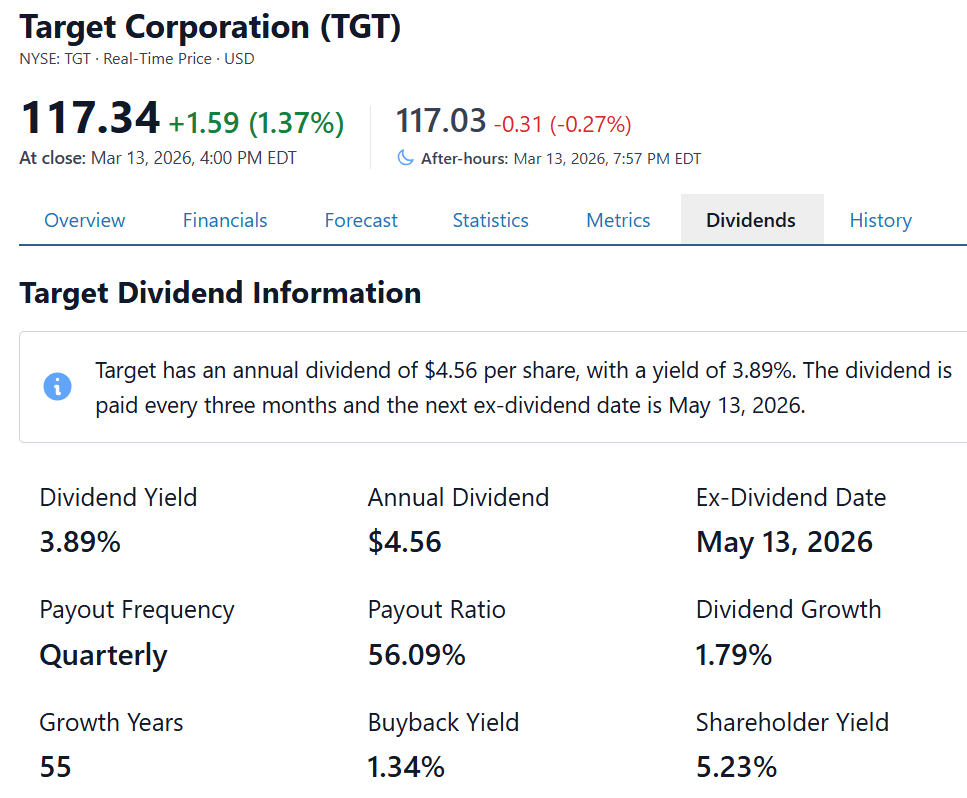
Target Corporation has long been a favorite among dividend investors in the retail sector.
Known for offering a mix of everyday essentials and stylish merchandise at competitive prices, the company serves millions of customers through both physical stores and digital channels.
Under the leadership of CEO Michael Fiddelke, Target is pursuing a strategy aimed at reigniting sales growth.
One of the first steps includes lowering prices on more than 3,000 items across categories such as apparel, home goods, and daily necessities.
The retailer is also investing heavily in its operations. Target plans to allocate over $2 billion this year to support its turnaround strategy.
About half of that investment will fund new stores and remodels, while the remaining funds will focus on enhancing the overall customer experience.
These initiatives come at a time when consumers remain cautious due to persistent inflation and broader economic pressures.
Many shoppers continue prioritizing value and essential goods, which makes Target’s pricing strategy particularly important.
If the company successfully revitalizes demand while maintaining cost discipline, it could strengthen both revenue growth and dividend sustainability.
Final Thoughts
Dividend investing remains a powerful strategy for building long-term wealth, especially when backed by companies with strong fundamentals.
Exxon Mobil, Verizon, and Target each operate in different sectors – energy, telecommunications, and retail – but share a common trait: the ability to generate stable cash flow while returning capital to shareholders.
For investors looking to balance income with long-term stability, these established market leaders offer compelling opportunities in today’s evolving economic landscape.
Source & References: stockanalysis.com
